
Monk fruit extract is a useful option when a formulation needs sweetness with less reliance on sucrose, but it is not a one-for-one replacement for every traditional sweetener. The right choice depends on whether the formula needs sweetness alone, or also the bulk, browning, texture, freezing behavior, or fermentation role supplied by sugar. Compare sweeteners by function first, then validate the complete system in the target product.
“Traditional sweeteners” can mean sucrose, glucose syrup, high-fructose corn syrup, dextrose, or established high-intensity options such as sucralose and stevia. They are not technically interchangeable. In a beverage, a sweetener may mainly set sweetness and solids; in a baked product, sucrose can also affect spread, aeration, browning, moisture retention, and texture. Glucose syrups and dextrose bring different solids and processing behavior. A comparison that treats all of them as a single benchmark will produce the wrong prototype.
Monk fruit extract is a high-intensity ingredient, so a small dose can provide sweetness but does not replace the mass of a recipe’s sugar. This can be an advantage in a clear drink where the main brief is sweetness reduction. It becomes a formulation gap in a cake, cookie, confection, or sauce if the removed sugar was also building volume, viscosity, color, or structure. Separate the sweetness target from the functional-solids target before choosing an ingredient.
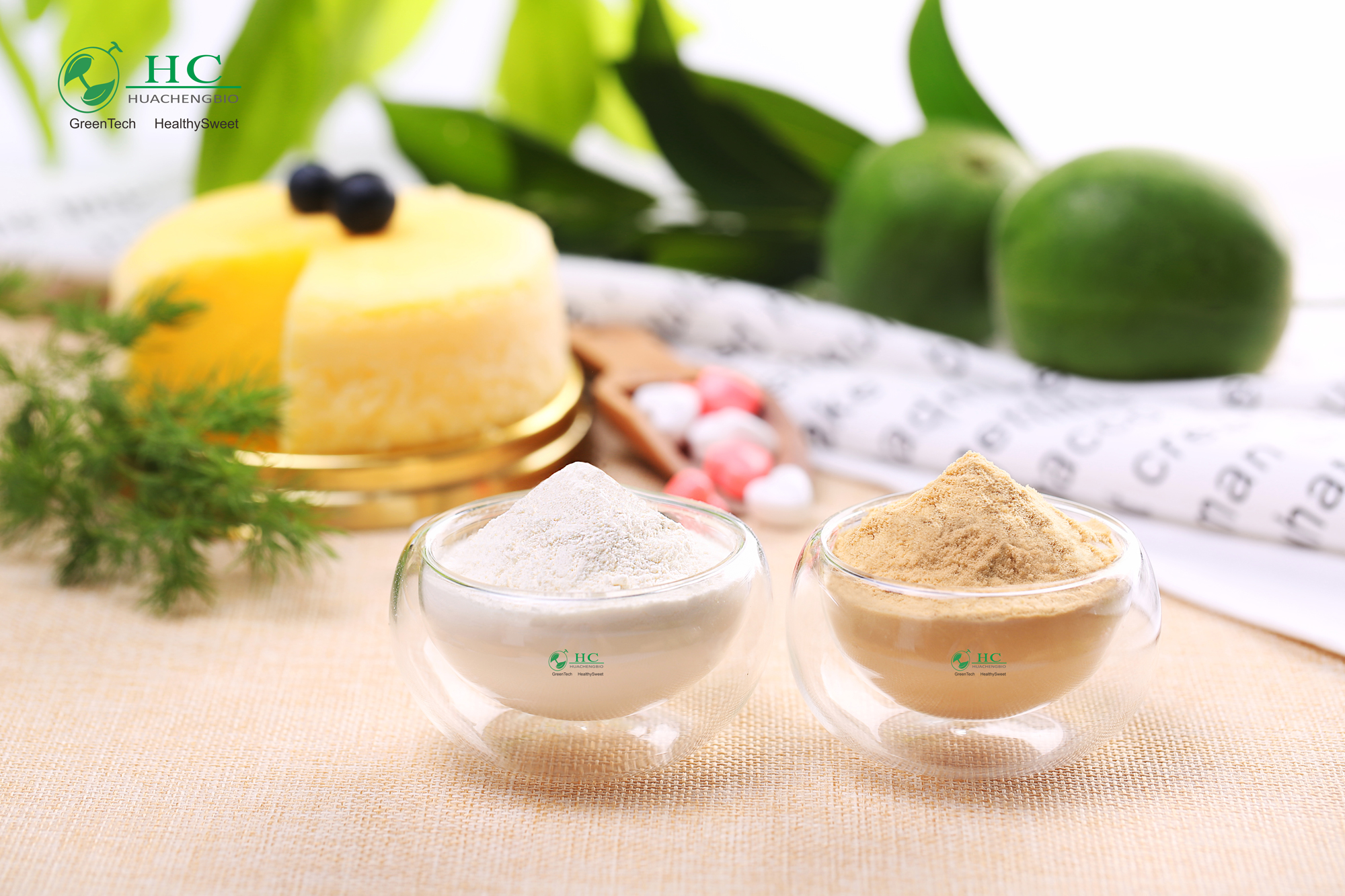
Also distinguish a standardized extract from a tabletop-style or bulk blend. HuachengBio’s extract range is specified by Mogroside V grade, while its monk fruit blend range includes formulations with erythritol, stevia plus erythritol, allulose, dietary fiber, or other components. Those are different starting materials: the blend’s carrier contributes mass and may affect taste, solubility, texture, and ingredient declaration. Ask for the exact composition and use guidance rather than assuming the blend behaves like pure extract.
| Decision criterion | Sucrose or other bulk sweetener | High-intensity monk fruit extract | Monk fruit blend |
|---|---|---|---|
| Sweetness and dosage | Familiar reference point; dosage also adds substantial solids. | High-potency sweetness; use level depends on extract grade and target profile. | May be formulated closer to sugar-like handling, but sweetness strength and composition vary by blend. |
| Bulk and structure | Can contribute mass and matrix-specific functionality. | Does not replace removed sugar solids by itself. | Carrier can add bulk, though it will not automatically reproduce sucrose in every application. |
| Sensory tuning | Provides the product’s existing sweetness profile and familiar balance. | Requires dose and flavor-system screening for onset, linger, and off-notes. | Evaluate the complete combination; carrier and co-sweetener affect the result. |
| Best first screen | Keep where sugar function is central or the brief does not require reduction. | Sweetness-led reduction, especially when added solids are undesirable. | When the prototype needs both sweetness and some added mass or easier dosing. |
| Key buyer check | Which sugar or syrup is the actual control, and what job does it perform? | Confirm Mogroside V assay, sensory target, dispersion, and use level. | Confirm every component, sweetness basis, carrier level, and application-specific guidance. |
This table is a screening framework, not a universal ranking. A product can use a combination: reduce sucrose partially, then use a high-intensity sweetener to restore perceived sweetness, while a separate bulking or texture strategy addresses the solids removed. That approach adds formulation complexity and may alter the label or process, so compare it against a simpler partial-reduction prototype.
Begin with a beverage when the main objective is to adjust sweetness without replacing sugar’s full bulk contribution. Prepare a control and several low-dose prototypes, then assess sweetness at the intended serving dilution. Record pH, flavor system, addition order, processing conditions, and time between preparation and tasting. Acidulants, mineral salts, flavor extracts, and other sweeteners can change the perceived balance; a result in a bench solution does not establish performance after heat treatment or storage.
For powders, verify dispersion and dose uniformity as well as taste. For ready-to-drink products, check clarity, color, aroma, and sweetness after the planned process. HuachengBio’s product family includes both extract and blend options, and its application portfolio includes beverages; request the grade-specific recommendation for the actual recipe rather than transferring a use level from a different beverage.
Here the main risk is removing sugar’s physical contribution while replacing only sweetness. An extract-only formula may need a separate bulking, moisture, or browning adjustment. A blend can supply a carrier, but the specific carrier may behave differently from sucrose under mixing and heat. Compare batter or dough handling, spread, color, moisture, texture, and flavor in a controlled trial. Keep batch size and oven conditions fixed so that process variation does not mask ingredient effects.
In flavored dairy, assess sweetness alongside protein, fat, acidity, and flavor load; score aftertaste and flavor balance rather than sweetness intensity alone. For confectionery, define the required solids and process behavior before selecting a high-intensity ingredient. Cooking profile, crystallization, texture, and water management may be part of the brief. In both categories, evaluate a matched control and document acceptance criteria before scaling.
Use a short sensory scorecard: sweetness onset, peak, linger, off-notes, flavor compatibility, and overall acceptance. Add objective product measures where relevant, such as soluble solids, viscosity, color, texture, or reconstitution time. Set pass/fail thresholds before the trial. Otherwise, teams can spend time comparing samples without agreeing what “better” means.
For HuachengBio’s monk fruit extract, the public product range identifies Mogroside V specifications from 1.5% to 98%, with listed examples including 20%, 25%, 40%, 50%, 55%, and 90% measured by HPLC. This range makes grade selection part of the formulation discussion: ask which grade fits the target dose and sensory brief, and confirm the current specification and test documentation for the sample and commercial lot. The published range alone does not establish suitability for a particular formula.
For blends, request the exact carrier and co-sweetener for the offered SKU. The published blend family includes erythritol, stevia with erythritol, allulose, dietary fiber, and other formulations; its stated one-to-four-times-sugar sweetness range is not enough to calculate a dose without knowing the exact blend and comparison basis. Confirm the ingredient proportions, recommended use, physical form, application guidance, and the documents needed for your sales market.
Send the supplier your product type, target sweetness, current sweetener system, ingredient list, pH or process conditions where relevant, desired reduction, label constraints, and trial scale. This lets the discussion focus on a grade or blend and the evidence still needed, rather than a generic request for “a sugar substitute.”
Share the application, current sweetener system, target reduction, process, and market. HuachengBio’s monk fruit extract and blend sweetener pages provide starting points for a grade and composition discussion.
Contact HuachengBio about a formulation reviewNo. High-intensity extract supplies sweetness at a much lower use level and does not replace the mass or all functions of removed sugar. If the recipe needs bulk, texture, browning, or moisture, test a separate functional adjustment or a specified blend. Start with the extract specifications and request a grade-specific use recommendation.
Choose based on the job. Pure extract is a starting point when sweetness is the target and the formula can tolerate low added solids. A blend may be more relevant when a carrier or easier dosing is required, but the carrier changes the ingredient system. HuachengBio offers blends with several listed carrier or co-sweetener types; ask for the exact offered composition and application use level before prototyping.
It can be screened as a sweetener, but extract alone does not replace sucrose’s bulk or guarantee the same browning and texture. Run a controlled bake and measure dough handling, spread, color, moisture, texture, and taste. If considering a blend, request the carrier composition and bakery-specific guidance through the blend product inquiry.
Provide the application, target sweetness and sugar reduction, current formula or sweetener system, process conditions, destination market, and label constraints. Also state whether bulk, viscosity, browning, texture, or dispersion must remain unchanged. Ask for the grade or blend composition, current specification, assay method, recommended use level, and applicable supporting documents.







 EN
 EN
 CN
 ES
 PT
 SV
 DE
 TR
 FR
 AR
 BG
 HR
 CS
 DA
 NL
 FI
 EL
 HI
 IT
 JA
 KO
 NO
 PL
 RO
 RU
 CA
 TL
 IW
 ID
 LV
 LT
 SR
 SK
 SL
 UK
 VI
 SQ
 ET
 GL
 HU
 MT
 TH
 FA
 AF
 MS
 GA
 BE
 UZ